Our Vision
At Grasshopper Health, we believe in a future where gait is recognized, measured and acted upon as a standard vital sign. Our goal is to enable earlier disease insights, more precise monitoring and longer, healthier independence.

Improving chronic care one step at a time
At Grasshopper Health, we believe in a future where gait is recognized, measured and acted upon as a standard vital sign. Our goal is to enable earlier disease insights, more precise monitoring and longer, healthier independence.
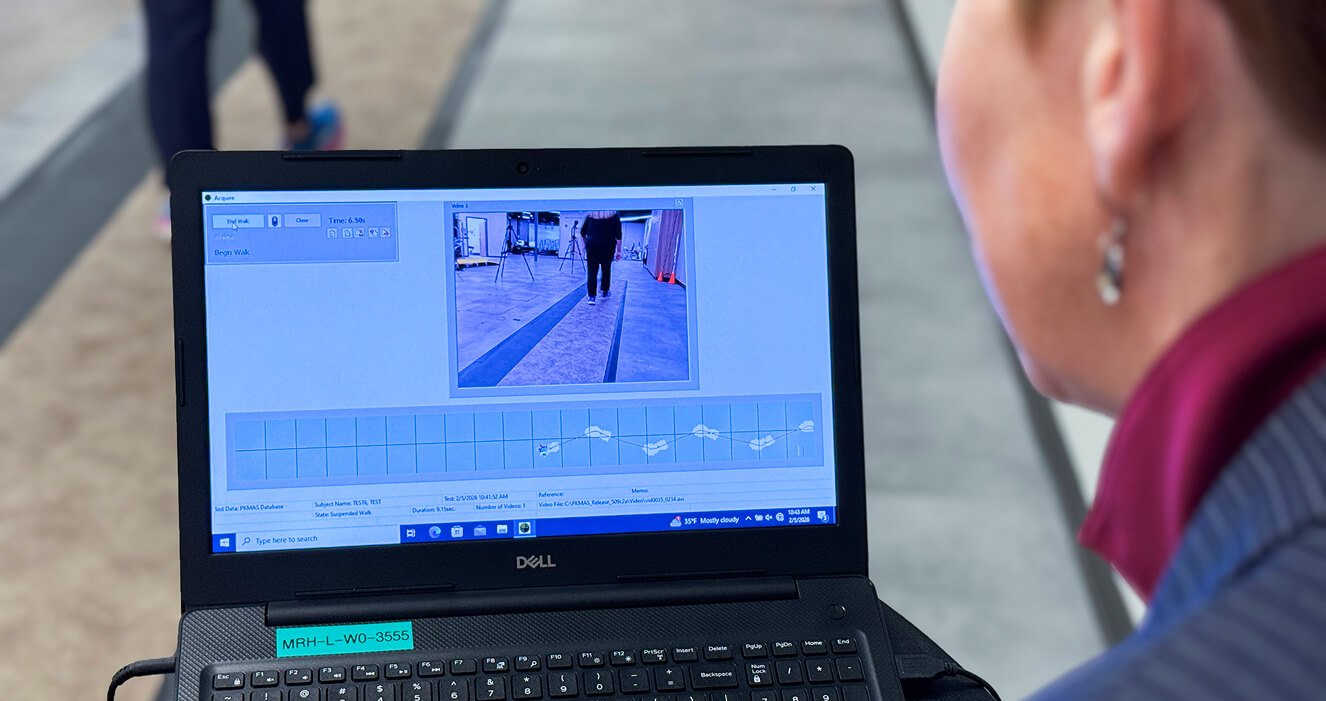
Grashopper Health equips clinicians and researchers with clinically validated, continuous gait intelligence captured in the real world – transforming how chronic disease is detected, staged and managed.
Our platform enables:

Grasshopper Health was born from a critical clinical insight: long before disease is diagnosed, it changes how we move. Recognizing the potential of this signal, researchers partnered with entrepreneur and computer scientist Richard Vlasimsky to translate this discovery into a scalable clinical solution.
Early research at the University of Nebraska demonstrated that subtle variations in gait can reveal early signals of:
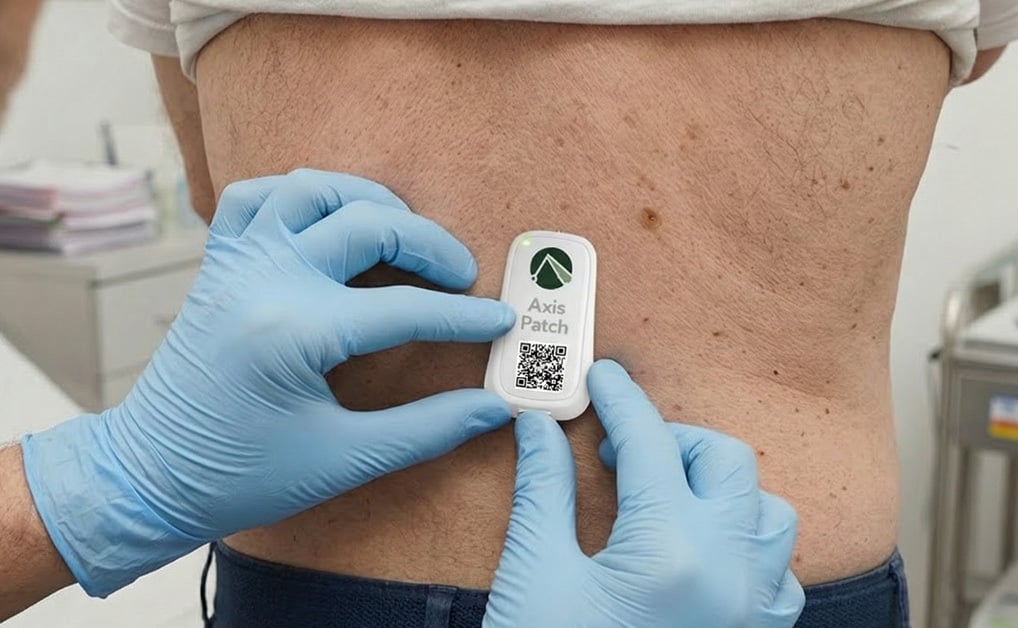
Together, our team of clinicians, engineers and AI specialists developed the Axis Patch™, a wearable platform designed to capture continuous, real-world gait data with clinical-grade precision.
Unlike traditional assessments that rely on brief, subjective observations in clinical settings, the Axis Patch™ enables:
This transforms gait from a snapshot into a dynamic, measurable biomarker.

What began as an academic discovery has evolved into a platform positioned to redefine how chronic disease is understood and managed. Every step becomes data. Every pattern becomes insight. Every insight moves care earlier.
Grasshopper Health is now enabling:

The healthcare system is facing a fundamental gap: we detect disease too late and measure it too infrequently.
Gait offers a solution:
By unlocking gait as a clinical signal, Grasshopper Health is helping shift healthcare from:

For decades, medicine has relied on five vital signs to understand human health.
But one of the most sensitive indicators of decline has remained largely invisible: How we move.
Grasshopper Health is helping establish gait as the sixth vital sign – continuously measured, clinically meaningful and predictive of long-term health outcomes.
Richard Vlasimsky is Co-Founder and Chief Executive Officer at Grasshopper Health. As a computer scientist and AI entrepreneur, Vlasimsky has previously founded two FDA-cleared software programs focused on early disease detection. He obtained both his bachelor’s degree and MBA from the University of Oklahoma. Vlasimsky specializes in applying machine learning intelligence to surface critical insights in healthcare to prevent and measure the unknown.
Fadi Alsaleem, Ph.D., is Co-Founder and Chief Technology Officer at Grasshopper Health. He is the James S. and Virginia A. Blackman Associate Professor at the University of Nebraska-Lincoln (UNL) for both the Architectural Engineering and Mechanical Engineering departments. He has more than 100 publications and 19 patent applications and has presented his work at the top engineering schools in the U.S. including MIT, Stanford and Berkeley. Dr. Alsaleem specializes in leading research in AI-integrated MEMS hardware for computing and sensing.
Lance Stewart is Co-Founder and Chief Commercial Officer at Grasshopper Health. With over three decades of experience in pharma, biotech and healthcare technology, Lance has led commercial strategy, market development and innovation initiatives at global organizations including Merck, McKesson, GNS (now AITIA), SKYGEN USA and CareEvolution. He obtained his bachelor’s degree from the University of Tulsa and completed the Healthcare Executive Program at Kellogg. Lance specializes in taking transformative medical technologies to market, with deep expertise in early detection, diagnostics and patient-centric care models (including remote monitoring).
Peter Savas is the CEO and Chairman of LikeMinds and on the National Research Board of the Kennedy Krieger Institute. Savas brings over 30 years of experience in executive leadership positions across life sciences. He was CEO of Alseres Pharmaceuticals, Inc., Chairman and CEO of Aderis Pharmaceuticals, developer of the Neupro® transdermal patch marketed worldwide to treat Parkinson’s disease and Restless Legs Syndrome, and Chairman and CEO of Unisyn, a cGMP contract manufacturer of biologics for clinical trials. Savas has held executive and operating leadership positions with Bristol Myers, Waters, Millipore, Genex and Zymark. Savas holds a BS in Chemistry from Syracuse University and is credentialed as a Professional Director by the American College of Corporate Directors.
Jeffrey Gold, M.D., is the President of the University of Nebraska System. He was previously the chancellor of the University of Nebraska Medical Center (UNMC) and board chair for the Nebraska Medicine Health System. Dr. Gold is certified by the American Board of Surgery and by the American Board of Thoracic Surgery, specializing in adult and pediatric cardiac surgery. Dr. Gold's national leadership roles have included more than 50 national professional committees and more than 100 national organizations, volunteer boards, government and public health councils. His research interests include healthcare policy, population health and epidemiology.
Ken Moreano is the former President and CEO of the Scott Data Center, where he led the development of advanced data center infrastructure and emerging AI-driven services. He has cofounded multiple venture funds, including the National Innovation Fund and Aksarben Discovery Capital, supporting early-stage technology companies. He has also advised or invested in more than 40 startups and remains deeply engaged in accelerating the commercialization of emerging technologies. Moreano’s interests include innovation ecosystems, AI infrastructure and evidence-based entrepreneurship.
Dr. Eric Markvicka is the Robert F. and Myrna L. Krohn Associate Professor of Mechanical and Materials Engineering at the University of Nebraska-Lincoln (UNL). He is a senior member of the National Academy of Inventors, National Strategic Research Institute (NSRI) Fellow and Peter Kiewit Foundation Engineering Academy (PKFEA) Faculty Fellow. Dr. Markvicka has also been a visiting researcher at the Air Force Research Laboratory, NASA Jet Propulsion Laboratory, NASA Johnson Space Center and Honeybee Robotics. His research interests include robotics, stretchable electronics, soft materials, liquid metals and bio-inspired engineering.
Dr. Iraklis Pipinos is a vascular surgeon and professor in the Department of Surgery at the University of Nebraska Medical Center (UNMC) and the chief of vascular surgery at the Omaha VA Medical Center. Dr. Pipinos is active in cardiovascular research and is the co-principal investigator of a large collaborative, NIH- and VA-funded basic and translational science research group. He is the recipient of many awards, including the Charles C. Guthrie Award by the Midwestern Vascular Surgical Society and the Lifeline Foundation Research Award by the Society for Vascular Surgery. Dr. Pipinos’s research focus is the development of regenerative medicine and biomechanical assistance strategies for damaged muscles and nerves in the legs of patients suffering from peripheral artery disease.
Sara Myers, Ph.D., is the Associate Vice Chancellor for Research and Creative Activity and a professor in the Department of Biomechanics at the University of Nebraska-Omaha (UNO). She also serves on the Board of Directors for BioNebraska, Nebraska CURE and UNeMed. Her current research, which focuses on improving quality of life in older individuals and those with peripheral artery disease, is being funded by the National Institutes of Health, Department of Veterans' Affairs and NASA. Dr. Myers’s research interests include lower extremity function in peripheral artery disease, human movement variability, gait biomechanics, rehabilitation and movement related pathologies.
Robert Smith, M.D., FACC, FSCAI, MSC, is a cardiologist in Tulsa, Oklahoma and is affiliated with multiple hospitals in the area, including Hillcrest Hospital South and Hillcrest Medical Center. Dr. Smith specializes in interventional cardiology including cardiac catheterization, coronary angioplasty and related interventional procedures such as coronary stents, atherectomy, intravascular ultrasound and peripheral vascular interventional procedures. He received his medical degree from the University of Oklahoma College of Medicine and has been in practice for more than 20 years.
Dr. Marc Bonaca is a cardiologist and vascular medicine specialist serving as Executive Director of the Colorado Prevention Center (CPC) and Director of Vascular Research and Professor of Medicine at the University of Colorado. Dr. Bonaca’s research focuses on ischemic risk with atherosclerotic vascular disease, risk prediction and risk modification using pharmacologic and biologic therapies. He has extensive experience designing and conducting large, multicenter randomized clinical trials, as well as analyzing registries and real-world datasets. His areas of interest include PAD, peripheral vascular disease and diabetes.
Dr. Kevin J. Klos is a neurologist in Tulsa, Oklahoma and is affiliated with Ascension St. John Medical Center. He received his medical degree from University of Oklahoma College of Medicine and has been in practice for more than 20 years. He specializes in treating dementia and Parkinson's disease, among other conditions.
Dr. Mark Hamilton is a facial plastic and reconstructive surgeon and the founder of Hamilton Facial Plastic Surgery in Indianapolis. He has been recognized by Castle Connolly and the Consumers’ Research Council of America as one of the top physicians in his field. Dr. Hamilton has held multiple leadership roles within the American Academy of Facial Plastic and Reconstructive Surgery, including Chair of the Emerging Technologies Committee and service on the Young Physicians, Credentials and Public Information committees. Dr. Hamilton has been an expert trainer and speaker for Allergan (the makers of Botox and Juvederm) for the past decade, traveling across the US to instruct and demonstrate best practices in aesthetic injectables.
Judith M. Burnfield, PT, Ph.D., is the vice president of research, director of the Madonna Research Institute, and Clifton Chair in Physical Therapy and Movement Science at Madonna Rehabilitation Hospitals. She is a nationally recognized physical rehabilitation clinician, researcher and scholar. Dr. Burnfield has published over 80 peer-reviewed journal papers and has directed grant initiatives worth over $8 million. Her federally funded research has generated patented technologies used worldwide in rehabilitation, fitness and home settings to improve function and independence.
Dennis Kraus, MD, is the Director of the Center for Head and Neck Oncology within the New York Head & Neck Institute and the Northwell Health Cancer Institute. He is Chair of the Lenox Hill Hospital Cancer Committee, Member of the Cancer Oversight Committee for the Northwell Health System, Professor of Otolaryngology at Northwell Health Hofstra School of Medicine and a Member of the Admissions Committee for the Hofstra School of Medicine. He has been a strong advocate for the use of minimally invasive surgery in the sinonasal region and skull base. Each of these developments has been associated with decreased morbidity with improved cosmetic and functional outcomes for patients with head and neck neoplasms. Dr. Kraus has traveled the world to present lectures in a number of venues. His clinical interests include all aspects of head and neck oncology.
Jennifer Schrack, PhD, MS, is the Director of the Center on Aging and Health at Johns Hopkins Bloomberg School of Public Health and researches the intersection between movement and health, with the goal of maintaining mobility and functional independence with aging. She is an expert on the use of wearables in both clinical research and real-world settings. Dr Schrack’s areas of interest include aging, physical activity, accelerometry, physical function, disability and dementia.
Ready to partner with Grasshopper Health? If you’re a researcher interested in clinical trials, an investor ready to help us make gait the sixth vital sign, or a doctor interested in seeing what the technology could do for your patients, then reach out today to learn more.