Detecting Disease Footprints

Monitoring gait through each step of disease progression

The Axis Patch is currently intended for research use only.
chronic-patients

Caring for Chronic Patients

Gait can be one of the earliest and most sensitive indicators of neurological, vascular and cognitive changes. By continuously analyzing real-world movement, Grasshopper Health enables clinicians and researchers to observe subtle gait patterns that may not be visible during periodic clinical visits. By supporting earlier awareness, healthcare professionals may be more informed to make more confident decisions for their patients.

Clinical studies are underway across multiple conditions to evaluate gait as an early functional indicator and longitudinal monitoring signal.*


Clinical Indications

Capturing early signs of disease progression

tab-img6

Peripheral Artery Disease

Peripheral Artery Disease (PAD) often reveals itself through slowed gait, shorter steps, reduced stride length and asymmetry long before a patient reports pain. These early mobility changes can be difficult to see during occasional clinic visits, but they may become much clearer through ongoing gait monitoring.

tab-img7

Parkinson’s Disease

Parkinson’s may be characterized early on by a fixed pattern, shuffling, reduced arm swing and difficulty turning, symptoms which may sometimes present years before a formal diagnosis is made. These quiet changes can be most easily observed when the person is walking or during routine tasks.

tab-img8

Normal Pressure Hydrocephalus

Normal Pressure Hydrocephalus (NPH) often comes with a slow and magnetic shuffling gait where patients struggle with initiating movement, often resembling apraxia. These changes are nearly invisible during the disease’s earliest stages, which can cause them to be overlooked.

tab-img9

Alzheimer’s Disease

Alzheimer’s gait is characterized by a slow, shuffling walk with reduced stride length and difficulty balancing, which induces a higher risk of falls. Early recognition and intervention can improve stability and help the patient maintain independence.

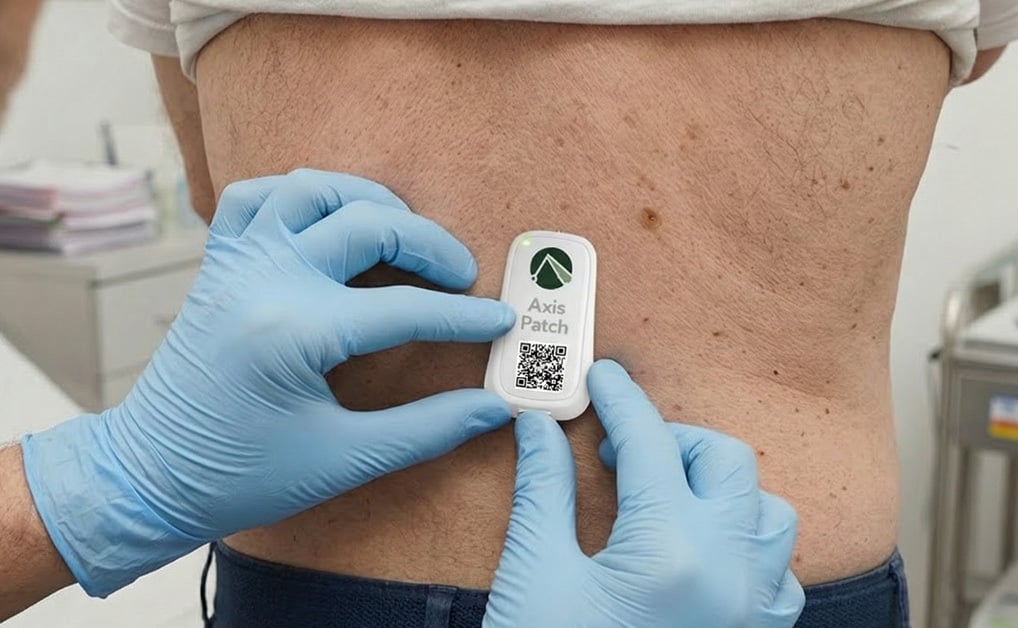
Grasshopper Axis Patch Male

The Axis Patch™

Grasshopper’s light and wearable Axis Patch is intended to support clinicians in helping identify early warning signs of these life-altering conditions, as well as analyze diagnosed patients over time to support longitudinal assessment of disease progression and facilitate intervention decisions.

By monitoring everyday movement, we aim to capture the quiet changes before they become detrimental, giving clinicians the opportunity to act quickly.

future-applications

Future Applications

The journey continues to new areas of investigation

The potential applications of continuous gait monitoring extend beyond the conditions currently under study. Research includes evaluating gait metrics to support recovery tracking following orthopedic surgery and other post-acute events where mobility improvement is a key outcome.

Beyond clinical care, gait analysis may also have applications in sports medicine and performance monitoring, where identifying early irregular movement patterns could help reduce injury risk and support safer training or rehab decision-making.

As research advances, the opportunity grows to consider gait as a foundational indicator of human health and functional performance.

*The Axis Patch is not yet FDA-cleared and is currently intended for research use only.

Learn More Today

If you’re interested in learning more about Grasshopper’s disease footprints or how you can get involved with the future of gait intelligence, connect with our team.