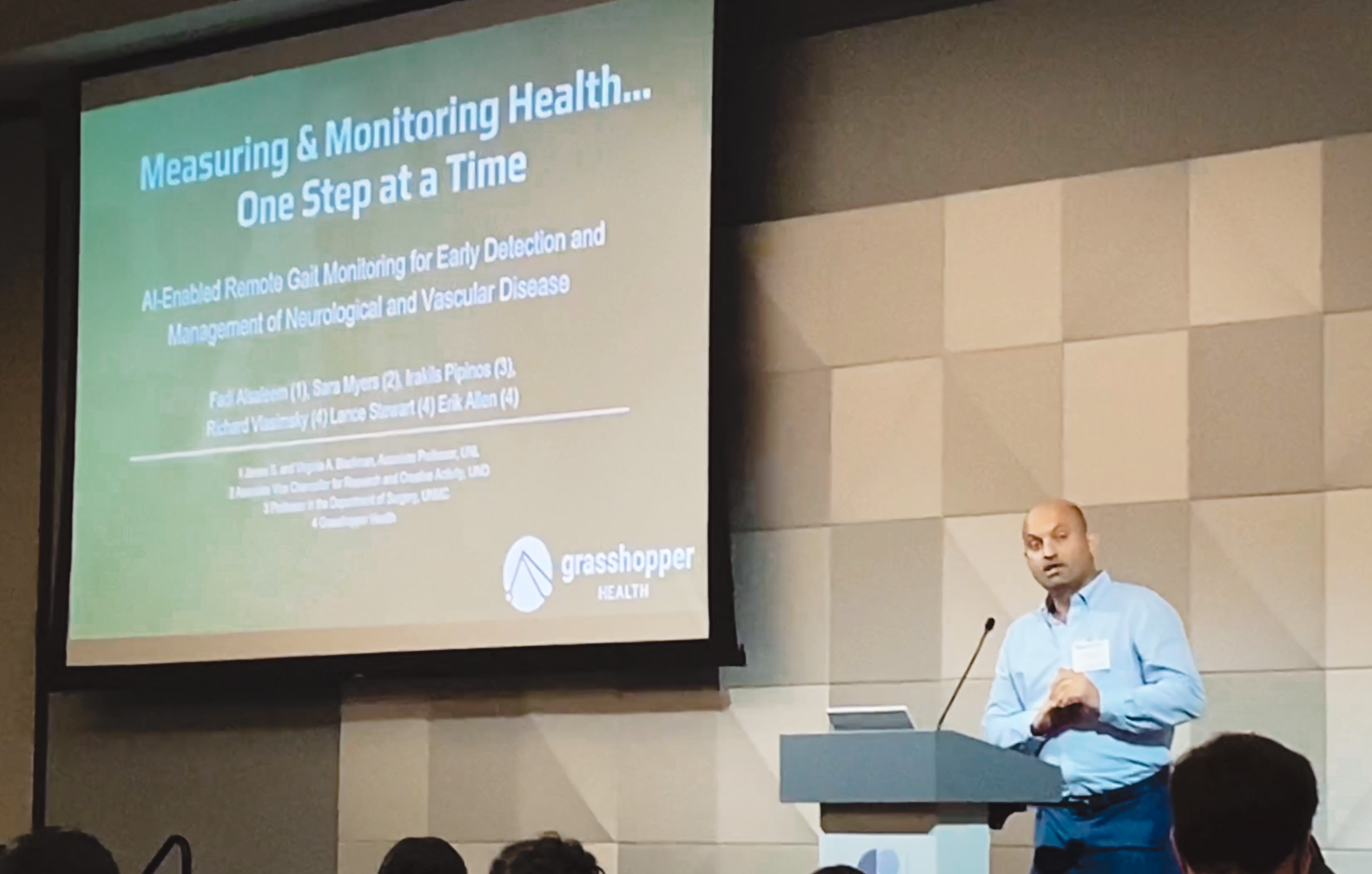
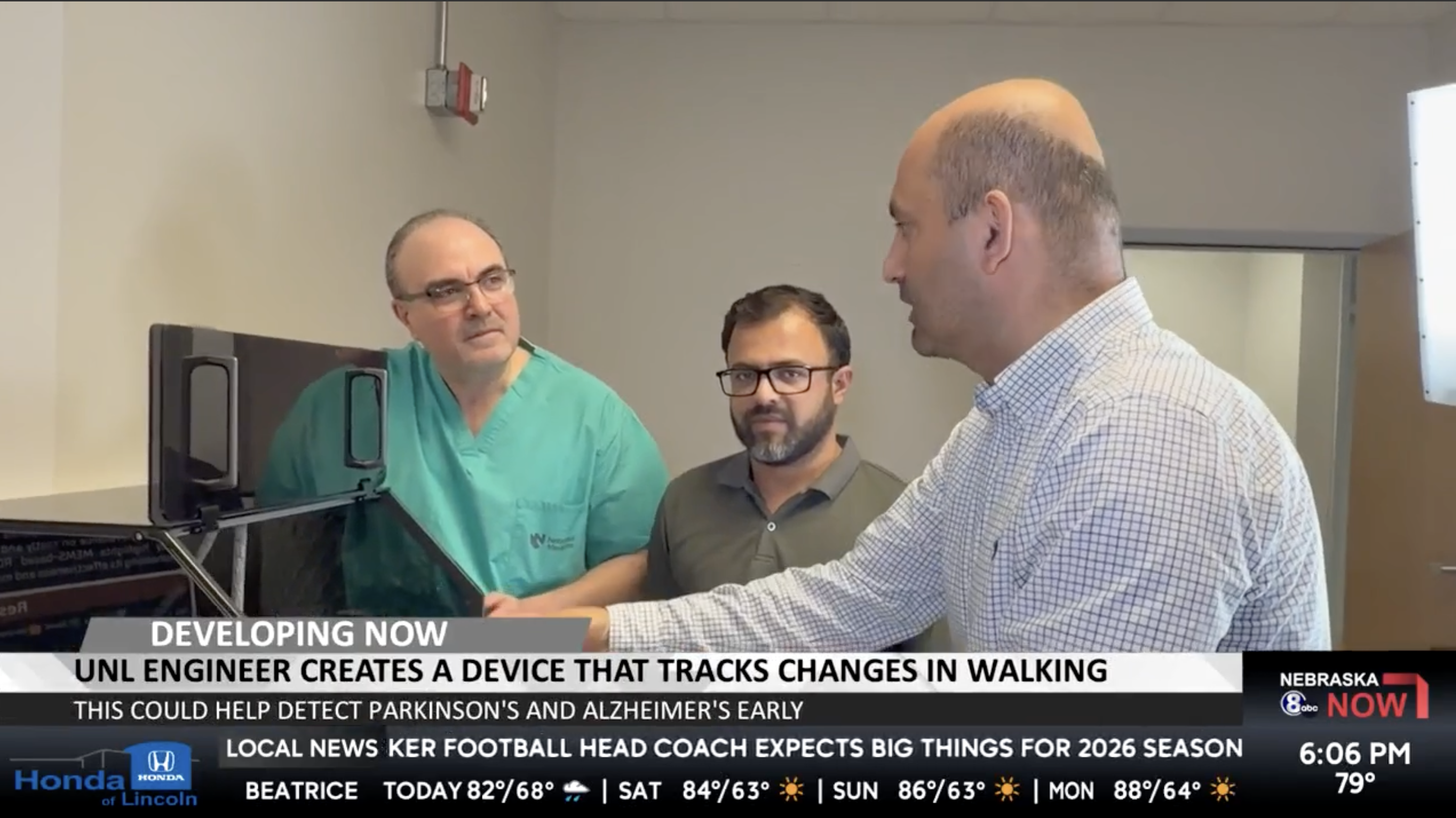
Our CTO presented Grasshopper's gait-biomarker research at UNMC's premier neuroscience gathering, an event that reminded us why our mission really matters.
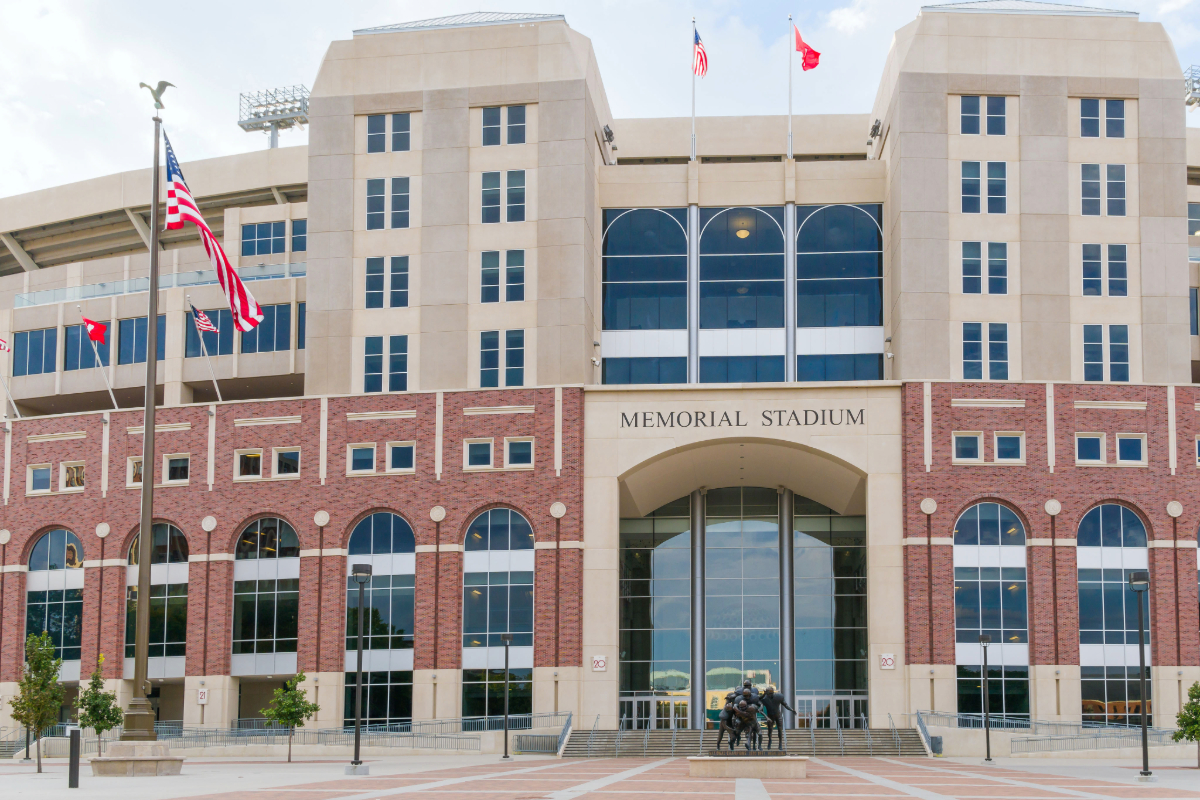
This month, our CTO, Dr. Fadi Alsaleem, and I had the privilege of attending the 2026 Big Ten Neuroscience Annual Meeting, hosted by the University of Nebraska Medical Center (UNMC) in Omaha. For a company built on the idea that a single wearable sensor can help monitor neurological disease, a full day surrounded by leading neuroscientists, clinicians and researchers from across the Big Ten was both rewarding and validating.
UNMC Kickoff & Collaboration
The meeting opened and closed under the direction of Dr. Matthew Rizzo, Frances & Edgar Reynolds Professor and Chair of UNMC's Department of Neurological Sciences, someone whose work sits close to home for us. Dr. Rizzo's research spans cognitive aging and neurodegenerative disease, and his lab is one of the clinical research partners currently working with Grasshopper on gait-based screening for Parkinson's disease. Having him frame the day's discussion, and then close it hours later, was a fitting bookend for a conference built around the idea that brain health touches every stage of life. Plus, it was great to hear from Howard Fox, MD, PhD, Professor, UNMC Department of Neurological Sciences, whose collaboration and research into studies of aging, including Parkinson’s and Alzheimer’s disease, is also a huge benefit to this community.
A Full Day of Neuroscience
The day moved through four sessions that captured the breadth of neuroscience research: sleep and synaptic circuits; brain health across the lifespan, from neurodevelopment to neurodegeneration; motivation and addiction; and, where Dr. Alsaleem’s talk landed, bioinformatics and artificial intelligence. Keynotes came from Chiara Cirelli (University of Wisconsin–Madison) on sleep and synaptic homeostasis, Jacob Michaelson (University of Iowa) on sleep biotypes in autism, and John Jay Ngai, Director of the NIH's BRAIN Initiative, on where federal neurotechnology investment is headed next.
Grasshopper's Presentation: Tracking Neurodegenerative Disease Through Gait
Dr. Alsaleem’s talk, “Interpretable Gait Biomarker Modeling for Neurodegenerative Disease Detection Using Wearable Lower-Back IMUs,” closed out the Bioinformatics & AI session, making the case for something we believe deeply at Grasshopper: that gait, tracked continuously and interpreted well, is one of the earliest and most honest signals the body gives us about neurological and vascular health.
He opened with the scale of the problem. Parkinson's disease affects nearly a million people in the U.S. and six million worldwide, often preceded by subtle gait changes: reduced arm swing, shuffling, difficulty turning, all of which can happen years before diagnosis. Normal pressure hydrocephalus, with its distinctive “magnetic” gait, is estimated to affect nearly 800,000 older Americans but is frequently misread as Alzheimer's or Parkinson's. Alzheimer's itself, now affecting more than 7.2 million Americans over 65, often shows up first as a slow, shuffling gait and balance trouble. And peripheral artery disease, which affects more than 10 million Americans and drives roughly 150,000 lower-limb amputations a year, changes the way people walk before it ever causes pain.
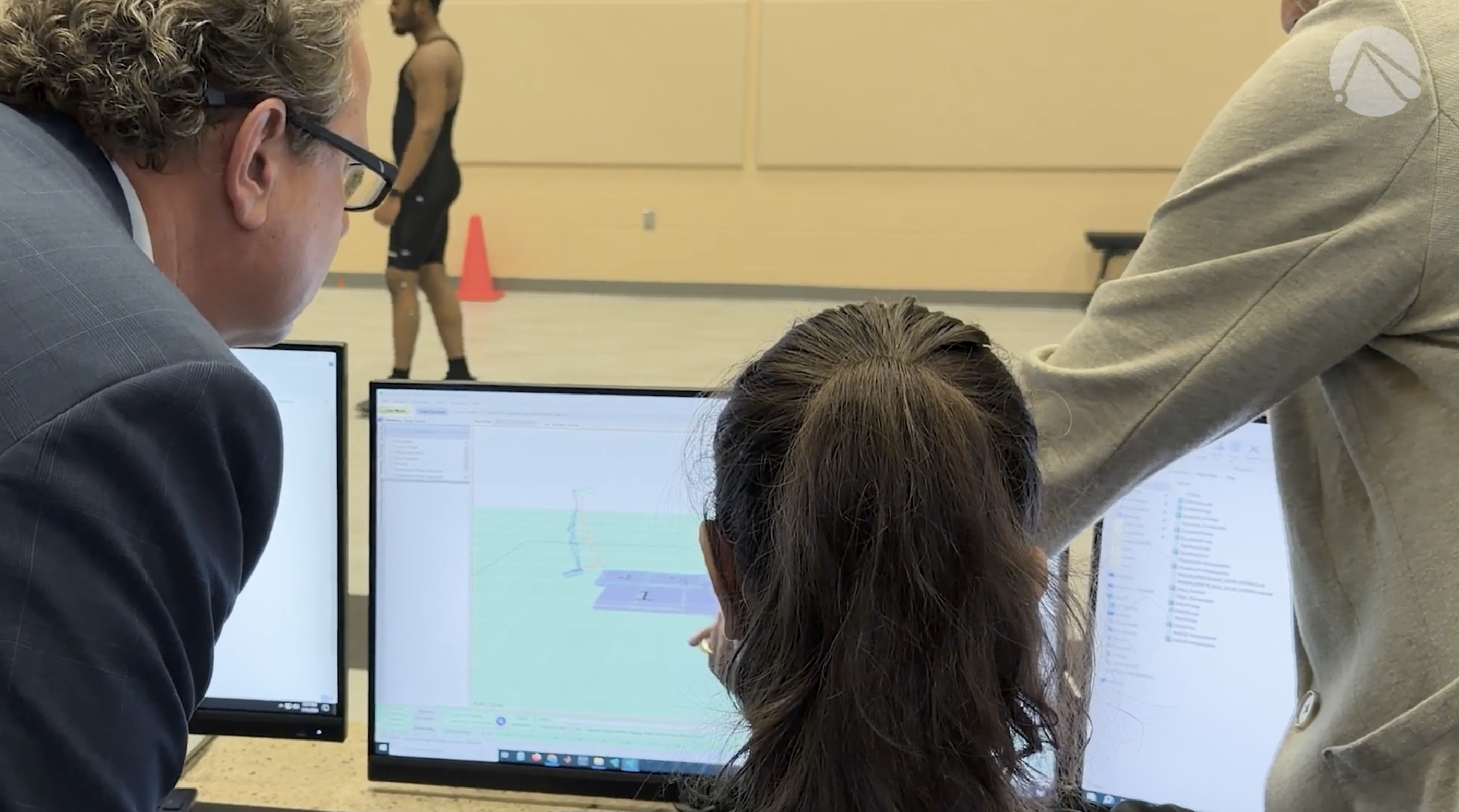
From there, Dr. Alsaleem walked through Grasshopper's approach: a single lower-back wearable sensor, no motion-capture lab or clinical walkway required, feeding a literature-weighted scoring model trained entirely on published gait-pathology research.
Across 549 participants and 12 disease cohorts spanning three independent datasets, our results have been consistent: every disease cohort tested, from Parkinson's to multiple sclerosis to congestive heart failure to peripheral artery disease, separated cleanly from healthy controls. In other words, the model reliably catches that something is wrong with a participants’ gait. Telling exactly which condition is causing it is the next challenge the team is working through, since several conditions share an overlapping “severity” signature in gait.
From Research to the Clinic
Dr. Alsaleem’s closed by connecting the research to what it looks like in practice today, with Grasshopper's Axis PatchTM and Motus Platform currently undergoing the FDA-process. He also shared Grasshopper's growing list of clinical research partners tackling different conditions: UNMC (Parkinson's, with Dr. Rizzo), UNO Gait Lab (gait and comparator evaluation under the guidance of Sara Myers, PhD), Brown/Butler Hospital (Alzheimer's, as a POINTER study site), the University of Calgary and University of Cincinnati (normal pressure hydrocephalus), Johns Hopkins (aging and falls), Madonna Rehabilitation Hospital (aging and gait), and CU Anschutz Medical Center and Ardent/OK Heart Hospital (peripheral artery disease).
Proud to Be in the Room!
It's rare to sit in a room with innovators who are truly shaping the future of healthcare, but that is exactly what you get with the Big Ten Neuroscience Annual Conference. Grasshopper is grateful to UNMC's Department of Neurological Sciences, Dr. Rizzo, Dr. Fox, and the meeting's organizers for putting together a day that pushed our own thinking forward. We're looking forward to seeing where this community takes gait research next.