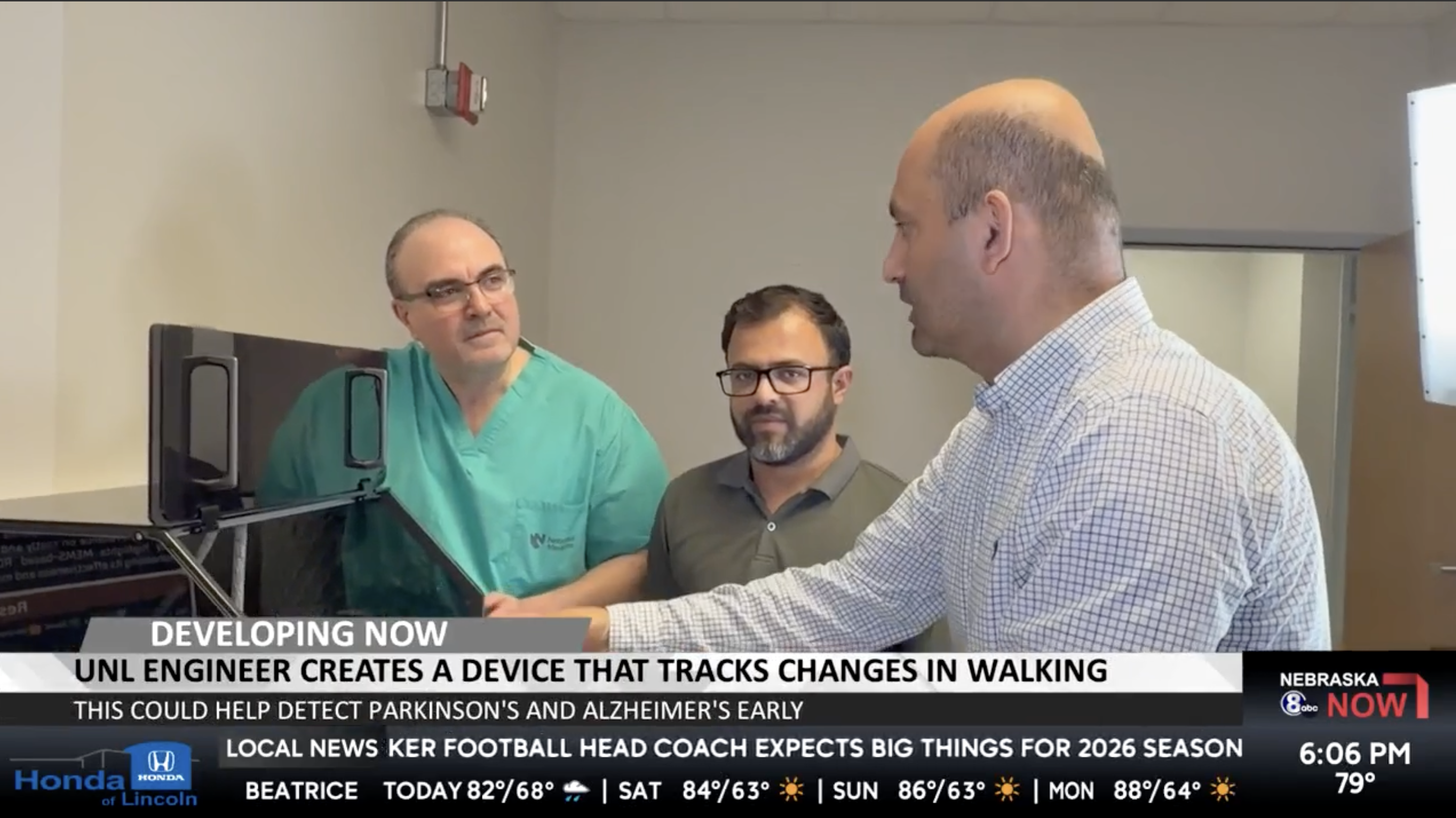
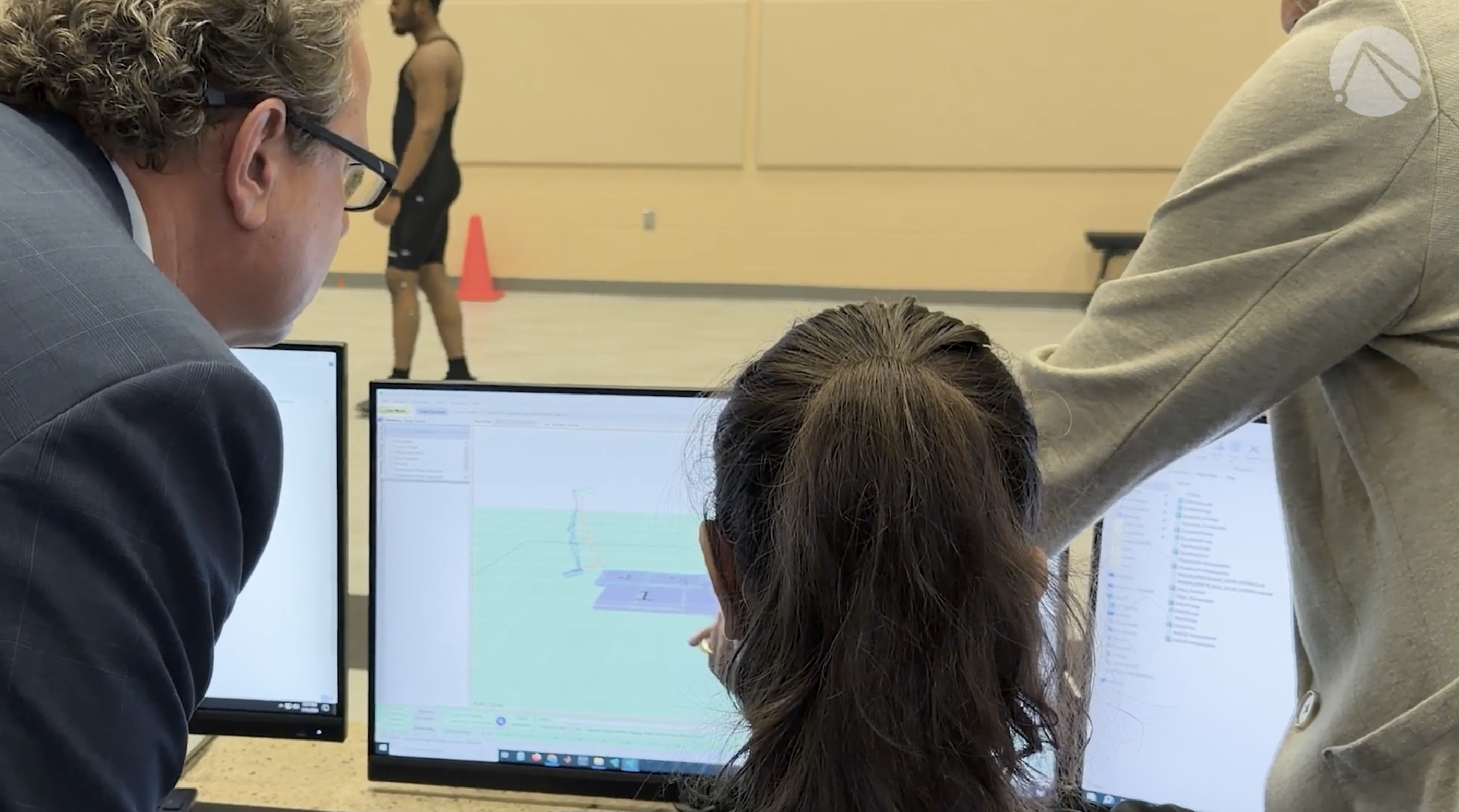
Lincoln's KLKN-TV got an exclusive look at how the Axis Patch* is made and talked to the doctors and engineers behind it.
KLKN-TV (Channel 8) in Lincoln, Nebraska, recently featured Grasshopper Health in a segment about our wearable gait-monitoring device, giving reporter Danielle DaSilva exclusive access to see how the coin-sized sensor is made and how it gives doctors an early read on what's happening inside the body. Here's a recap of what the story covered.
Different Diseases, Different Walks
The segment opens with a simple but powerful idea: the way someone walks can be the first clue that something is wrong, long before other symptoms appear. Dr. Iraklis Pipinos, Professor of Vascular Surgery at the University of Nebraska Medical Center, explained that different conditions leave different fingerprints on a person's gait. “If the problem is your joints, you have a certain walking pattern. If the problem is blood flow, you have a little different pattern, and if your brain is the problem, different again,” he said.
A Multidisciplinary Effort, By Design
Dr. Pipinos also laid out how this kind of work gets done and why it takes more than one type of expert. Physicians study how a disease affects the body; biomechanists like UNO's Dr. Sara Myers connect those effects to specific walking difficulties; and, as Pipinos put it, “engineers like Dr. Alsaleem take this information and produce a sensor.” That's exactly how the Axis Patch* came together: after a conversation with University of Nebraska President Dr. Jeffrey Gold, Fadi Alsaleem, our co-founder and engineering professor at UNL, spent the past year applying his architectural engineering research to build a small sensor that sticks to the lower back like a bandage, continuously monitoring movement and needing to be recharged only about every two weeks.
From Nebraska Research to a Nebraska Company
The story traces the funding and support that got the device this far: a grant from the Nebraska Department of Economic Development, along with backing from private investors and Nebraska businesses, including CQuence Health. Alsaleem described the result as a “strong eco-system of support that can move things from research to product.” That ecosystem is also what led us to partner with CEO Richard Vlasimsky to found Grasshopper Health.
What's Next
As shared in the news story, our team is currently building out the AI model behind the sensor before moving into clinical trials, which will recruit both Parkinson's patients and healthy volunteers for comparison. Alsaleem shared some of the bigger ambitions behind the technology, including making it affordable enough for widespread use around the world.
Watch the full segment and read KLKN's story here ›
The Axis Patch™ is currently intended for research use only.