When I first began focusing on adult hydrocephalus, it sometimes felt like I was the only person in the room. Despite the number of adults affected and the number of families trying to understand what was happening to their loved ones, the condition wasn’t receiving the attention it deserved. Over time, awareness has grown, but one subtype still stands out as both underrecognized and extremely important: normal pressure hydrocephalus (NPH).
NPH is a disease of the elderly, so we know what the prevalence and incidence is. Yet many people living with it are never diagnosed or diagnosed too late for meaningful intervention. That’s why understanding gait, and how it changes, is so essential.
Why Gait Is the Earliest and Most Important Sign
For most patients with NPH, the first symptom is with their gait and balance. That balance component is critical, and gait disturbance is almost a required feature to have the diagnosis.
We know how fast people should walk at a given age. When gait velocity slows beyond what’s expected, and when people become unsteady, the consequences can be severe. When gait velocity slows down to a certain low number, it can increase fatality chances by about five times, due to falls or hospitalization because of an inability to move.
These gait changes also affect confidence and independence. Patients begin to worry about falling and will avoid engaging in activities. And without intervention, other symptoms like cognitive changes and bladder control issues often follow.
How Gait Has Traditionally Been Measured
Clinicians have used several methods to assess gait:
-
Simple timed tests, like walking a set distance with a stopwatch
-
The Timed Up and Go (TUG) test, where patients stand up, walk three meters, turn and return
-
More sophisticated systems like camera‑based gait labs
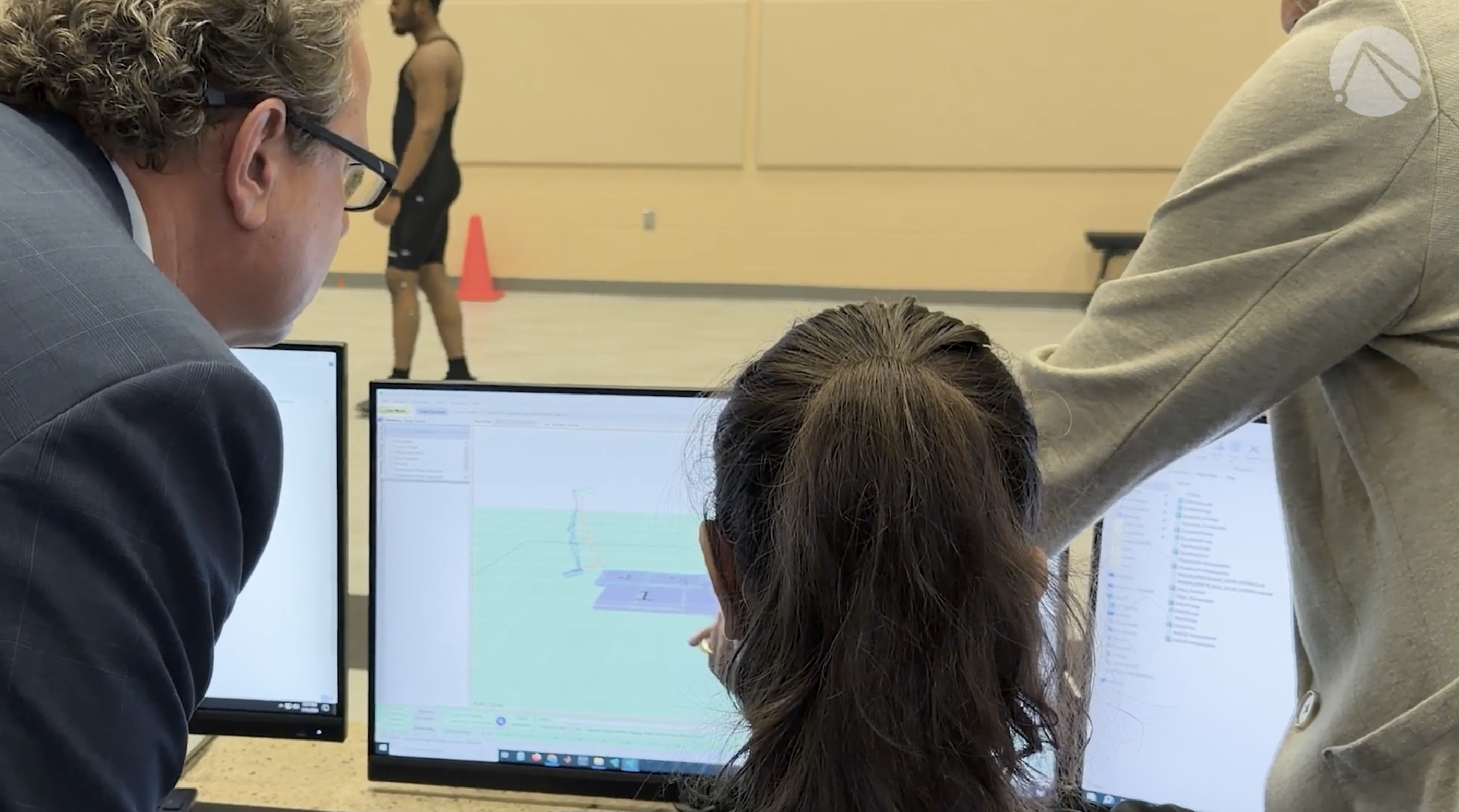
But all of these share the same limitation: it’s in the clinic, a special environment. What we really need is to understand gait when they’re outside of the clinic after they’ve left. Real‑world gait reflects real‑world challenges: uneven surfaces, obstacles, fatigue and daily routines.
The Promise of Real‑World Gait Monitoring
Grasshopper Health’s Axis Patch* is an example of the kind of technology that can reshape how we manage NPH. It allows the measurement of many gait parameters while the patient is out in the community walking or shopping and in their house. Over time, this kind of data may reveal a pattern that is highly predictive of NPH.
This matters because other conditions can mimic gait problems such as Parkinson’s Disease, osteoarthritis and more. If we can identify gait patterns specific to NPH, we can screen more effectively and reduce unnecessary testing.
Real‑world gait monitoring also has enormous value for follow‑up care. Patients with NPH require long‑term, longitudinal monitoring because shunts can fail and symptoms can change. In my region, some people would have to drive up to five hours to see us. But with remote gait data, we could determine whether a patient truly needs to make that trip.
It’s a win‑win: increased access for patients and more efficient care for clinicians.
Why Early Identification Matters
One of the most important things we’ve learned is that gait usually precedes cognitive and bladder changes. And unlike many neurodegenerative conditions, NPH is treatable. If you intervene at the appropriate time, you can reverse what’s happening with gait and balance. You can reverse what’s happening with cognition. But if you wait too long, damage is done and you can’t repair things.
That’s what makes early identification so critical and why gait is such a powerful diagnostic-supporting window.
Big Changes on the Horizon
When I began working in this field, there was no clinical trial that had been done to prove that NPH was a disorder that could be treated with a shunt. We led a study that changed that, published in the New England Journal of Medicine in 2025. More research is underway, and we’re at the precipice of some big changes.
Awareness, advocacy and innovation, including real‑world gait analytics, will help us identify patients earlier, treat them more effectively and ultimately help more people say the words I find most gratifying throughout my practice as a neurosurgeon: “I have my life back.”
The Axis Patch™ is currently intended for research use only.