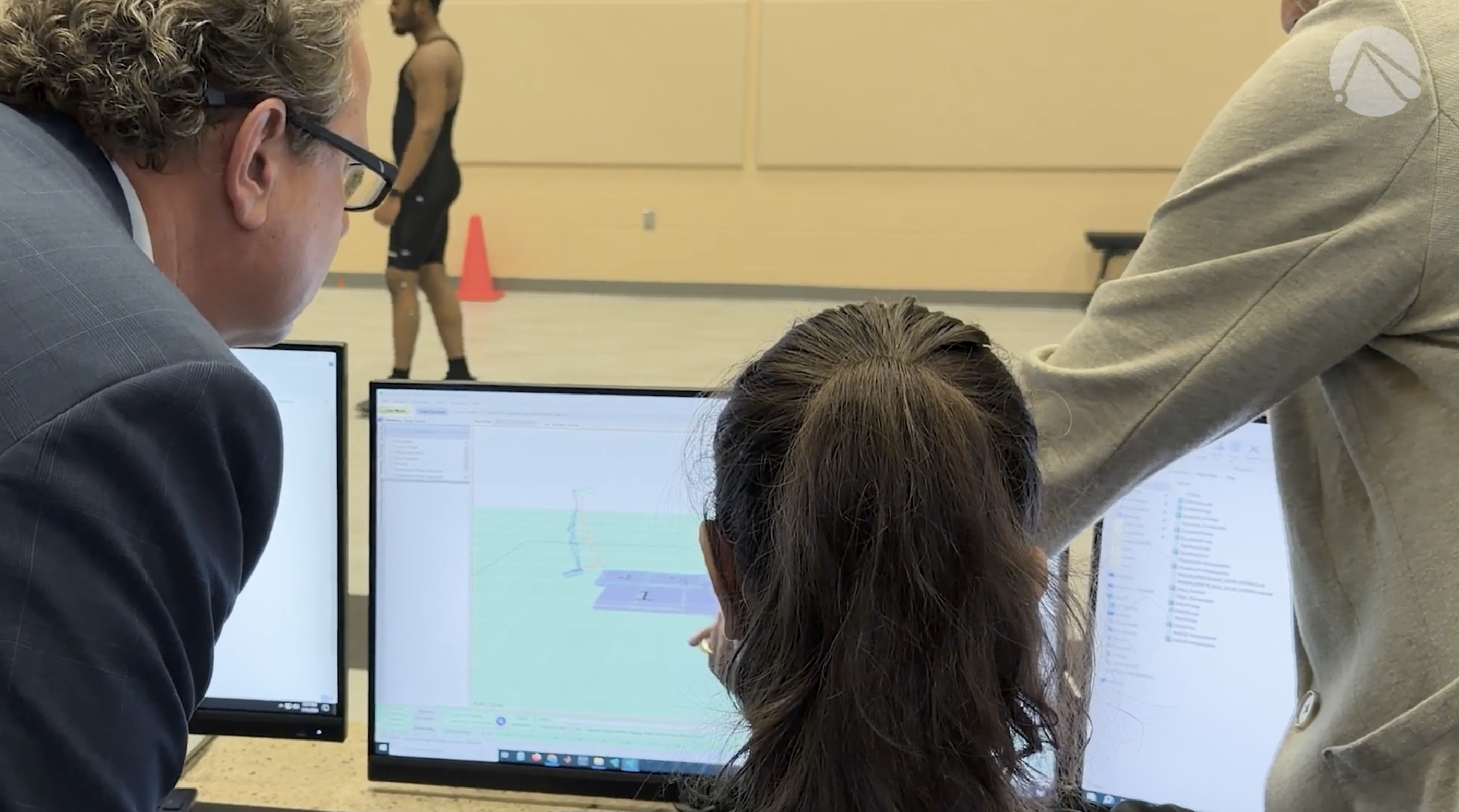
Gait abnormalities are associated with an increased risk of death over five years, with studies suggesting mortality rates approaching 30%. Yet gait abnormalities remain underrecognized in routine clinical care.
As physicians, we tend to move quickly when we identify a disease like cancer that’s known to carry serious consequences. We develop treatment plans, establish follow-up protocols and focus on improving outcomes all at once. But for gait abnormalities, which may carry a mortality risk comparable to or even greater than some conditions that prompt immediate intervention, there is often no comparable response.
What Can Walking Tell Us?
When a patient comes into my office and tells me they're having difficulty walking, there are several possibilities that immediately come to mind:
-
The problem could be musculoskeletal, such as osteoarthritis of the hips or knees, lower back disease or nerve compression.
-
It could be neurological, involving conditions such as Parkinson's disease or normal pressure hydrocephalus.
-
We also think about vascular causes, particularly peripheral arterial disease (PAD), which actually carries a high five-year mortality rate, making it higher than that of breast cancer.
Difficulty walking is often treated as an inconvenience or a consequence of aging when it actually could be an early signal of a significant underlying health issue. For physicians, the challenge is determining what that signal means and how early we can identify it.
Difficulty Walking Isn't Always About Aging
One condition that proves this point particularly well is PAD, which occurs when plaque builds up in the arteries that supply blood to the legs and other areas of the body. It is highly prevalent, severely underdiagnosed and associated with significant mortality risk. Yet many patients don't seek evaluation because they assume the changes they're experiencing are simply part of getting older.
That's one of the reasons PAD continues to be missed. Patients notice that they can't walk as far as they once could. Their legs feel weak and heavy, and instead of viewing those symptoms as warning signs, they often normalize them. By the time the disease is discovered, opportunities for earlier intervention may be long gone.
Peripheral Arterial Disease Hiding in Plain Sight
Our current model for treating PAD often relies on snapshots in time where a patient may undergo periodic imaging studies and only see their physician once or twice a year. Between those quick encounters, we have limited visibility into how the patient’s condition is evolving in everyday life.
PAD is particularly important because an earlier diagnosis does far more than explain walking difficulties. It can also surface cardiovascular risks and give physicians an opportunity to intervene earlier and potentially alter the trajectory of a patient's long-term health.
Seeing the Future with the Axis PatchTM
That's where wearable monitoring like the Axis PatchTM* has the potential to change the standard of care.
One of the things that attracted me to Grasshopper Health and its technology is the possibility of collecting continuous, patient-specific, real-time information. Rather than relying exclusively on isolated office visits or occasional testing, wearable sensors can provide a more complete picture of how a patient's mobility changes over time.
If ongoing clinical research demonstrates strong correlations between specific gait abnormalities and conditions such as PAD, the adoption of the Axis PatchTM doesn’t need a second thought. Instead of waiting for symptoms to become severe enough to prompt evaluation, we can intervene earlier and improve quality of life through treatments that restore blood flow, such as stenting or bypass procedures.
How Continuous Gait Monitoring Could Change Cardiovascular Care
In cardiovascular medicine, we make important decisions based on a patient's functional status. Patients with heart failure, for example, are often categorized according to how much physical activity they can perform before developing symptoms.
Patient selection for procedures like transcatheter valve replacement, which reduces the need for major open-heart surgery, still relies heavily on assessments of frailty and functional status, often based on questionnaires and short walking tests. Wearable gait monitoring could provide a more objective way to measure those factors and support clinical decision-making.
A New Era of Wearable Medicine
Of course, every meaningful advancement in medicine must be supported by rigorous clinical evidence. High-quality clinical trials will be essential to determine how gait monitoring can best be integrated into patient care and where it can have the greatest impact.
I believe we're approaching an important moment in healthcare. Over the last decade, wearable technologies have changed how we think about monitoring heart rhythm, blood sugar, blood pressure and other critical health metrics; gait may be next. The simple act of walking has the potential to tell us far more than we've traditionally recognized. If we can use that information effectively, we may be able to track disease earlier, intervene sooner and ultimately improve patient outcomes and quality of life.
I believe that's a future worth pursuing.
The Axis Patch™ is currently intended for research use only.